
pigmentationskin-concerns
Melasma: Why Pigmentation Returns, and What Actually Helps
By Dr. Qusai Shakhatreh ·
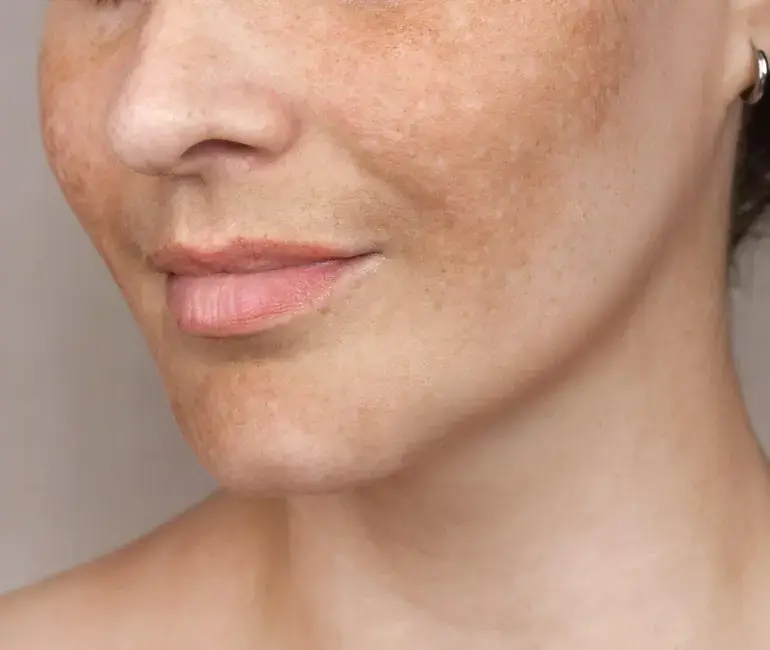
Melasma is the patchy brown pigmentation that appears on sun-exposed skin, most often on the cheeks, forehead and upper lip. Unlike a post-inflammatory mark, which fades once the cause is gone, melasma has its own cells producing the pigment and will keep doing so.
That is the single most important thing to understand about it, and it is why melasma recurs after treatment that looked successful. The treatment interrupts the production; it does not remove the cells that will resume it.
So the plan has two halves, and the second half is the one that decides the result. The first is the in-clinic treatment — topical agents, peels or devices, chosen according to how deep the pigment sits. The second is daily: broad-spectrum sunscreen every morning, and treating the hormonal and vascular drivers that produced it in the first place.
Sunscreen is not an add-on here. Melasma is one of the few conditions where a patient who uses it consistently does better than a patient who has the best procedure available and then does not.