

Nova Derma | Amman, Jordan
Vitiligo Treatment in Amman
Dermatologist-Led Care for Localized, Facial, Segmental & Nonsegmental Vitiligo
Not every white patch is vitiligo.
Vitiligo is a chronic autoimmune pigment disorder that causes well-defined areas of skin to lose color. It can affect any skin tone and may involve the face, hands, feet, body folds, hair or other areas.
At Nova Derma, the first step is to confirm that the color loss is vitiligo, assess its pattern and activity, and then choose treatment according to the areas involved, extent, age, previous response and patient priorities.
Vitiligo Can Look Different Depending on Pattern and Location
Not every white patch is vitiligo, and vitiligo itself does not always look the same. The pattern, the activity and the body site all change what can realistically be expected.
### Nonsegmental Vitiligo
The most common pattern, often affecting both sides of the body. It may remain stable or continue to develop over time.
### Segmental Vitiligo
Usually affects one segment or side of the body. It often begins earlier in life and may progress for a period before becoming stable.
### Face & Areas Around the Eyes or Mouth
Facial vitiligo often responds differently from patches on the hands or feet, so expectations should be site-specific.
### Hands & Feet
Vitiligo on the fingers, toes, hands and feet is often more resistant to repigmentation than facial areas.
### Hair-Bearing Areas
Hair within an affected patch may remain pigmented or turn white. White hair within a patch can be associated with a lower likelihood of repigmentation.
### Children & Teenagers
Assessment considers age, disease activity, affected areas and the emotional impact of the condition, with treatment chosen carefully for the individual patient.
## How We Diagnose Vitiligo
A dermatologist can often diagnose vitiligo from the history and skin examination. Wood's light examination may provide additional support in selected cases, especially when the degree of depigmentation is difficult to judge. Fungal infection, post-inflammatory color change and other pigment disorders can resemble vitiligo, so confirming the diagnosis matters before treatment.
### Are Blood Tests Always Needed?
No. Routine broad laboratory testing is not required for every patient with vitiligo. Selected external laboratory tests may be recommended when the history, symptoms or examination suggest thyroid disease or another associated autoimmune condition.
The location and activity of vitiligo can be just as important as the amount of skin involved.
Is Vitiligo Treatment at Nova Derma Right for You?
Treatment depends on whether the condition appears active or stable, how much skin is involved, where the patches are located and how the condition affects the patient. The goals may include slowing progression when possible, encouraging repigmentation and protecting affected skin, while keeping expectations realistic.
Treatment Here May Be Suitable If You Have
- Limited vitiligo that can be treated with prescription topical medication selected for your age, body site and disease activity
- A small number of localized stable patches that may be suitable for targeted 308 nm Excimer treatment
- Patches on areas where site-appropriate treatment choices can be monitored closely
- A need for skin-protection, sun-protection and camouflage guidance alongside medical treatment
Treatment May Need to Be Modified or Postponed If There Is
- New or rapidly spreading depigmented patches, which need an activity assessment before any localized device treatment
- Widespread vitiligo, for which a localized device is not appropriate and broader phototherapy or coordinated medical care is needed
- A color change that has not been confirmed as vitiligo, since fungal infection and post-inflammatory pigment change can look similar
- White hair within an affected patch, which is associated with a lower likelihood of repigmentation and needs realistic expectation-setting
- An expectation of a fixed or guaranteed result; repigmentation is gradual and response varies by patient and body site
Topical Prescription Treatment
For limited vitiligo, treatment may include prescription topical medication selected according to the patient's age, body site, disease activity and medical history. Sensitive areas such as the face and body folds require site-appropriate choices and monitoring.
Skin Protection & Camouflage
Sun protection is important because depigmented skin burns more easily, and tanning of the surrounding skin can make the contrast more visible. Cosmetic camouflage can also be helpful when desired.
308 nm Excimer for Localized Vitiligo
Nova Derma uses the Kernel 308 nm Excimer for selected localized vitiligo. It provides targeted UVB treatment to affected patches while limiting unnecessary exposure of surrounding uninvolved skin.
Excimer is most appropriate when the disease is localized enough for targeted treatment. It is not a substitute for broader therapy when vitiligo is widespread or rapidly progressing.
Treatment Takes Time
Vitiligo treatment is not a one-session procedure. Repigmentation is usually gradual, and a meaningful treatment trial often takes months. Facial areas often respond better than fingers and toes, and new patches can still appear during treatment.
When Vitiligo Is More Extensive or Active
Widespread or rapidly progressing vitiligo may require broader phototherapy or medical treatment beyond a localized device. The dermatologist determines whether treatment at Nova Derma, referral or coordinated care is the most appropriate next step.
Response varies by patient and body site, and a meaningful treatment trial often takes months. New patches can still appear during treatment.
We Assess
- Nonsegmental vitiligo
- Segmental vitiligo
- Facial and periorificial vitiligo
- Hand and foot involvement
- Vitiligo in body folds and sensitive areas
- Hair whitening within affected patches
- Localized stable patches
- Vitiligo in children and teenagers
- New or rapidly spreading depigmented patches
Whether the condition appears active or stable affects the treatment choice, and that is one of the first things the consultation establishes.
Laboratory testing is arranged externally
Dermatologist-led care
Your Diagnosis Is Confirmed by a Specialist Dermatologist
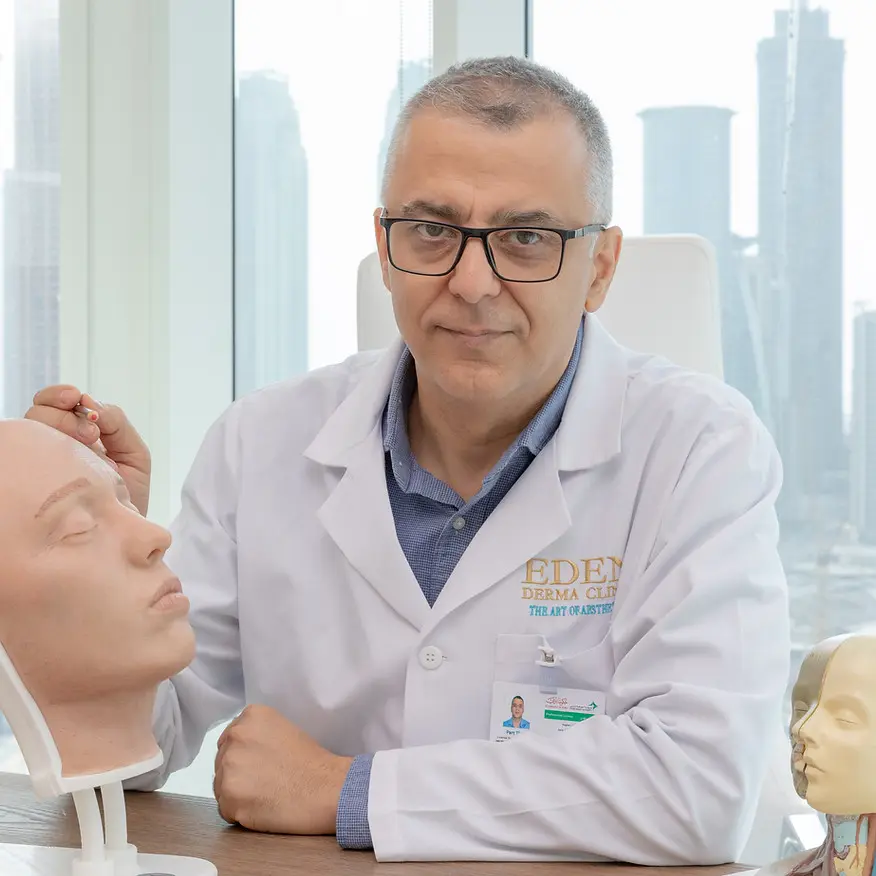
Dr. Qusai Shakhatreh
Specialist in Dermatology & Venereology
Vitiligo care at Nova Derma is led by Dr. Qusai Shakhatreh, Specialist in Dermatology & Venereology. The consultation confirms the diagnosis, judges whether the disease appears active or stable, and sets expectations that match the areas involved.
Vitiligo FAQ
Is vitiligo contagious?
No. Vitiligo is an autoimmune pigment disorder. It is not an infection and cannot pass from one person to another.
Can vitiligo be cured permanently?
There is no guaranteed permanent cure. Treatment can help restore color and control disease activity in some patients, but response varies and new patches can appear.
Does vitiligo always spread?
No. Some patches remain stable for years, while others enlarge or new patches appear. Disease activity affects treatment choice.
Can vitiligo affect the hair?
Yes. Hair within affected skin can turn white, including scalp, eyebrow, eyelash or beard hair.
Do I need blood tests?
Not routinely. Testing is individualized and is performed through an external laboratory when clinically indicated.
When is 308 nm Excimer useful?
It may be useful for selected localized vitiligo patches. It is a targeted treatment and is not intended to replace broader treatment for widespread or rapidly progressing disease.
Concerned About White Patches or Spreading Vitiligo?
A dermatologist assessment can help confirm the diagnosis, determine whether the condition appears active or stable, and choose the most appropriate treatment pathway.
At Nova Derma, treatment may include topical prescription therapy, skin-protection and camouflage guidance, targeted 308 nm Excimer for selected localized vitiligo, and coordination or referral when broader treatment is needed.
Nova Derma · Amman, Jordan