
NOVA DERMA | AMMAN, JORDAN
Hyperhidrosis & Excessive Sweating Treatment in Amman
A Personalised Plan for Sweating That Disrupts Daily Life
Sweating helps regulate body temperature. Hyperhidrosis means sweating more than the body needs for cooling, sometimes enough to soak clothing, make objects difficult to hold or interfere with work and social activities.
At Nova Derma in Amman, treatment starts with assessing where you sweat, when it happens and how it affects you. Your dermatologist checks whether the pattern suggests primary hyperhidrosis or whether a medical condition or medicine may be contributing.
Treatment may include prescription antiperspirants, selected medicines or botulinum toxin injections. The choice depends on the affected area, severity, previous treatments and your medical history.

Areas We Assess
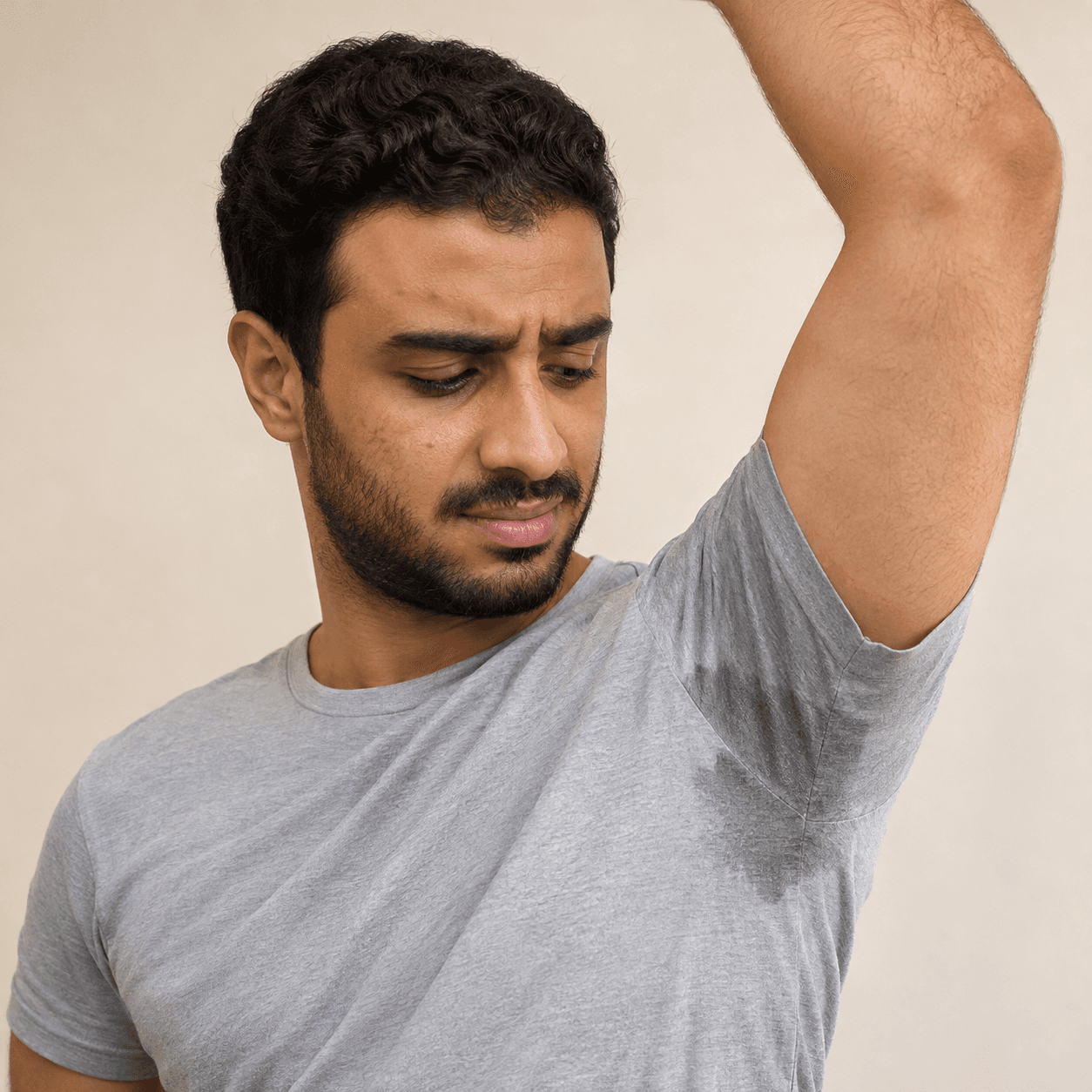
Underarm Sweating
Persistent wet patches and frequent clothing changes can make work, social occasions and everyday dressing uncomfortable.
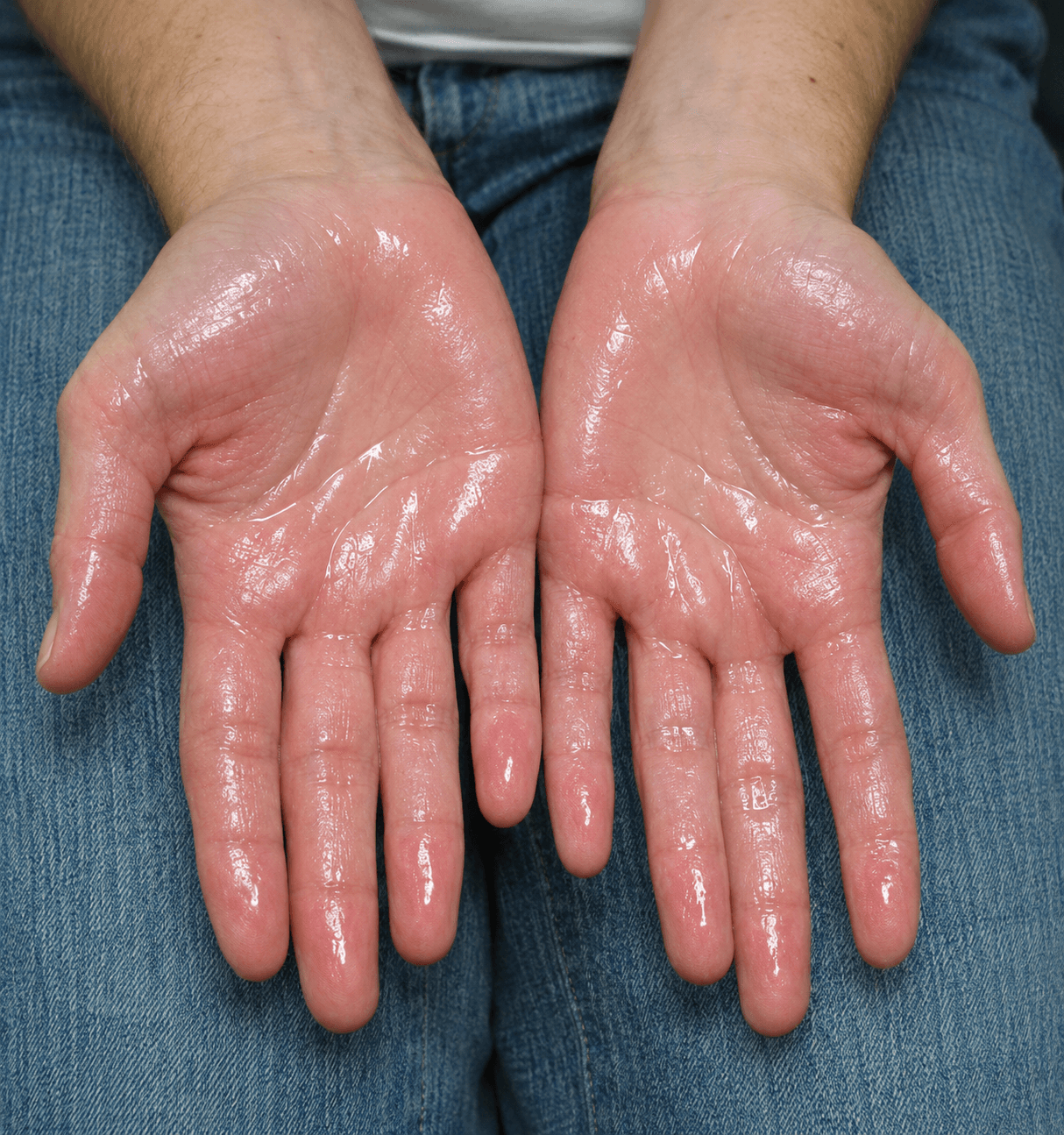
Sweaty Palms
Wet hands can affect writing, using a keyboard, handling tools, gripping objects and shaking hands.
Sweaty Feet
Excess moisture can soak socks and shoes and contribute to skin irritation and discomfort.
Face and Scalp Sweating
Sweating around the forehead, face or scalp requires an individual assessment because both the possible causes and suitable treatments vary.

Primary Hyperhidrosis or Another Cause?
Primary Localised Hyperhidrosis
This commonly begins in childhood or adolescence, may run in families and often affects similar areas on both sides of the body. Sweating usually subsides during sleep.
Episodes can happen without heat or exercise. Stress may make sweating worse, but it is not the only explanation.
Sweating That Needs Further Assessment
A medical or medication-related cause should be considered when sweating:
- Begins recently or changes substantially.
- Affects much of the body.
- Repeatedly soaks nightclothes or bedding despite a cool sleeping environment.
- Accompanies fever, unexplained weight loss or other new symptoms.
- Starts after a medicine is introduced or its dose changes.
These features do not establish a diagnosis, but they make assessment important before choosing treatment. Do not stop a prescribed medicine without discussing it with the prescribing clinician.
What Happens During the Consultation?
Your dermatologist reviews the onset and pattern of sweating, family history, medicines, treatments already tried and the impact on daily life.
Examination helps guide the next step. Laboratory tests are not automatically needed for a typical primary localised pattern. Targeted testing or referral may be appropriate when another cause is suspected.
Bring a medication list and, if possible, the names of antiperspirants or treatments you have used.
Treatment Options for Excessive Sweating
Prescription Antiperspirants
Stronger antiperspirants, often containing aluminium salts, can reduce sweating in selected areas. They are commonly an initial treatment.
Correct use matters: many products are applied to completely dry skin at bedtime, following the product instructions and your dermatologist’s advice. Irritation may require a change in formulation or frequency.
Botulinum Toxin Injections
Botulinum toxin temporarily reduces the nerve signals that activate sweat glands in the treated skin. It may be considered when localised sweating remains troublesome despite appropriate topical treatment.
Iontophoresis for Hands and Feet
Iontophoresis uses a controlled, mild electrical current through water to reduce sweating. It is an option your dermatologist may discuss for palms or soles.
An initial course is usually followed by maintenance treatments. Suitability, device choice and safe use need assessment; some patients use an appropriate home device after instruction.
Oral Medicines in Selected Cases
Medicines that reduce sweating, including anticholinergic medicines, may be considered when several areas are affected or local treatments are insufficient.
Possible effects include dry mouth, constipation, blurred vision and difficulty emptying the bladder. Reduced sweating can also increase the risk of overheating, particularly during exercise or outdoor work. Treatment requires individual selection and monitoring.
If sweating has a secondary cause, addressing that cause is part of the plan.
Botox for Underarm Sweating
BOTOX® contains onabotulinumtoxinA. It may be suitable for adults with severe primary underarm sweating that has not been adequately controlled with topical antiperspirants.
What Does the Procedure Involve?
The treatment area is assessed and marked, then small injections are placed into the underarm skin. The number and distribution of injections depend on the area being treated. Comfort measures can be discussed.
When Will I Notice Improvement?
Sweating may begin to decrease within several days. The effect is generally clearer after approximately one to two weeks.
How Long Can the Benefit Last?
Benefit often lasts around six months, although some people experience a shorter or longer response. Treatment is temporary, and repeat sessions are considered when troublesome sweating returns.
Indications, Contraindications & Precautions
When Underarm Botox May Be Appropriate
- The pattern is consistent with primary underarm hyperhidrosis.
- Sweating significantly interferes with daily activities or comfort.
- Correctly used topical antiperspirants have not provided enough control.
Contraindications & Situations Requiring Additional Assessment
- Known allergy to the botulinum toxin product or its ingredients.
- Active infection at a proposed injection site.
- Pregnancy, plans for pregnancy or breastfeeding.
- Neuromuscular conditions, such as myasthenia gravis.
- Existing swallowing or breathing difficulties.
- Medicines, including certain antibiotics, muscle relaxants and other sweating treatments.
- Recent botulinum toxin injections elsewhere.
Significant skin inflammation may require postponement. New or unexplained widespread sweating should be assessed before a local injection treatment is chosen.

What About Injections for Hands, Feet or the Face?
These areas require separate planning.
For the palms, injections may cause discomfort and temporary weakness that affects grip. Tell your dermatologist if your work or hobbies depend on fine hand control.
Sole injections can be uncomfortable, and the response may differ from underarm treatment. Antiperspirants and iontophoresis are important alternatives to discuss.
Facial treatment requires particular care because nearby muscles may be affected, potentially causing temporary asymmetry or eyelid drooping. Suitability is assessed individually.
What to Expect After Injections
Brief stinging, small raised injection marks, redness, tenderness or bruising may occur. Most people can resume ordinary daily activities soon afterwards, while following the specific aftercare advice provided.
Difficulty swallowing or breathing, or marked generalised weakness after injections, requires urgent medical attention.
The aim is a useful reduction in sweating and its effect on daily life. Complete dryness is not guaranteed.
Everyday Measures That May Help
- Choose breathable clothing and change damp socks.
- Allow shoes to dry between uses.
- Identify personal triggers, such as spicy food, and adjust them if helpful.
- Use antiperspirants as directed and report persistent irritation.
These measures can improve comfort alongside medical treatment.
Hyperhidrosis Treatment FAQ
What is the difference between deodorant and antiperspirant?
Deodorant mainly addresses odour. Antiperspirant reduces sweating. A product may contain both, but deodorant alone may not control excessive wetness.
Is excessive sweating always caused by anxiety?
No. Stress can trigger or worsen sweating, but primary hyperhidrosis can occur without anxiety. Sweating itself may also cause embarrassment or worry.
Is Botox a permanent treatment?
No. Its effect gradually wears off. The timing of repeat treatment depends on the return of symptoms and your response.
Will underarm Botox stop sweating throughout my body?
No. Treatment acts mainly in the injected area, and sweating elsewhere continues. Report any troublesome change in sweating after treatment.
Do sweaty hands and feet always need injections?
No. Antiperspirants, iontophoresis and selected medicines may be considered. Injections are one option, with different comfort and functional considerations for each area.
Do I need blood tests before treatment?
Not everyone does. Testing depends on the history, examination and whether there are features suggesting an underlying cause.
Is Excessive Sweating Affecting Your Daily Life?
Book a hyperhidrosis consultation at Nova Derma in Amman to assess the cause and discuss a treatment plan suited to your symptoms and daily needs.
Nova Derma · Amman, Jordan