
Nova Derma | Amman, Jordan
Laser Tattoo Removal in Amman
Progressive Tattoo Fading With Q-Switched Nd:YAG Laser
Laser tattoo removal is a gradual process rather than a one-session procedure.
At Nova Derma, tattoo removal is performed using the Bison Lucid Q-PTP® Q-Switched Nd:YAG laser. Treatment is planned according to tattoo color, ink density and depth, tattoo age and location, skin type, previous removal treatment and the goal of treatment.
Topical anesthesia is part of our tattoo-removal protocol and is applied before treatment to make the session more comfortable and tolerable.
We Treat
- Professional tattoos
- Amateur tattoos
- Black and dark tattoo pigment
- Selected colored tattoos
- Residual pigment after previous tattoo-removal treatment
- Partial fading before a cover-up tattoo
Not every tattoo responds at the same speed, and complete clearance cannot be guaranteed.
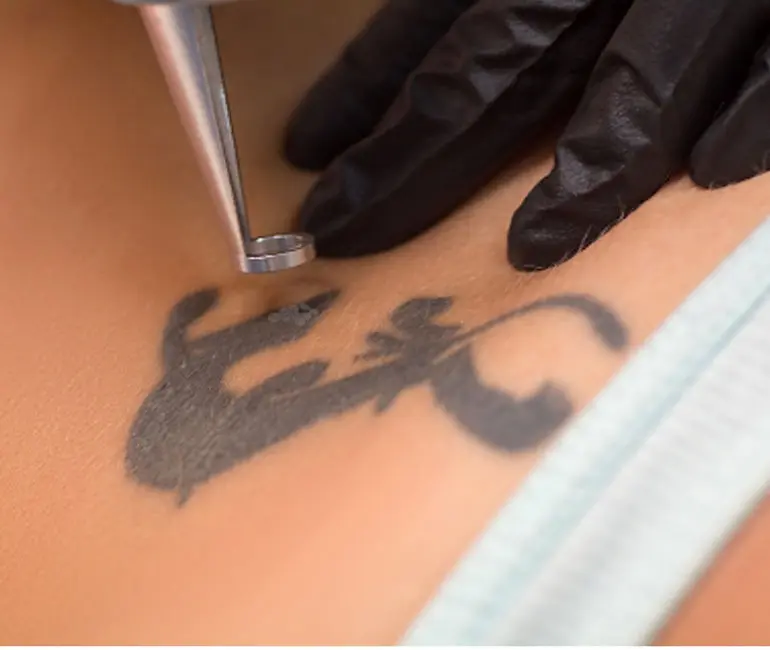
How Does Laser Tattoo Removal Work?
Q-Switched energy breaks the ink into fragments the body clears over weeks
Q-Switched laser energy is absorbed by tattoo pigment and breaks larger ink particles into smaller fragments. The body then gradually clears part of this fragmented pigment over the following weeks.
Because each session treats only part of the remaining pigment, multiple sessions are usually required.
Bison Lucid Q-PTP® Q-Switched Nd:YAG. The system uses 1064 nm and 532 nm wavelengths. Dark pigments such as black generally respond more predictably to 1064 nm treatment, while 532 nm may be used for selected red or warm-colored pigments when appropriate.
The wavelength and treatment approach are selected according to the pigment and skin rather than applying the same setting to every tattoo. The goal is progressive fading while allowing safe skin healing between sessions.
Which Tattoos Respond Best?
Black & Dark Ink
Black and other dark pigments generally respond more predictably to Q-Switched Nd:YAG treatment.
Colored Tattoos
Colored inks vary considerably. Some colors may respond less consistently or may require a wavelength not available for that pigment, so complete clearance cannot be promised.
Professional Tattoos
Professional tattoos often contain more densely packed and deeper pigment and may require more sessions.
Amateur Tattoos
Some amateur tattoos contain less or more superficial pigment and can sometimes fade faster, although response varies.
Response depends on the ink, depth and skin — not simply on the size of the tattoo.
Other Factors That Affect Tattoo Clearance
- Tattoo age
- Amount and density of ink
- Depth of pigment
- Tattoo location
- Previous tattoo-removal sessions
- Skin type and pigmentation tendency
- Individual clearance of fragmented pigment
Clearance is assessed over time, so a tattoo that fades slowly in the first weeks is not a tattoo that will not fade.
Cosmetic Tattoos & Permanent Makeup
Cosmetic tattoo pigments and permanent makeup require particular caution because some inks can contain compounds that may darken unexpectedly after laser exposure.
When pigment chemistry is uncertain, the dermatologist may recommend a test spot or may advise against laser treatment depending on the expected risk.
Complete Removal Is Not Always Possible
Some tattoos fade extremely well, while others can leave residual pigment, color change or a faint visible outline.
If the goal is a cover-up tattoo, complete removal may not be necessary. Partial fading can make the existing design easier for the tattoo artist to cover.
The number of sessions depends on the tattoo — not on a fixed package for everyone.
What to Expect During Treatment
Topical Anesthesia Is Part of the Treatment
Laser tattoo removal can be uncomfortable. At Nova Derma, topical anesthesia is applied before treatment as part of the tattoo-removal protocol to make the session more comfortable and tolerable.
Cooling may also be used during treatment.
During the Laser Session
The laser delivers short pulses of energy into the tattoo pigment. Patients may feel brief snapping, stinging or heat. Temporary whitening or 'frosting' of the tattoo can appear immediately after treatment.
What Happens After the Session?
These changes usually settle gradually as the skin heals.
- Redness
- Swelling
- Tenderness
- Blistering
- Superficial crusting
- Temporary darkening or lightening of the treated skin
How Far Apart Are Sessions?
Sessions are spaced several weeks apart to allow the skin to recover and to give the body time to continue clearing fragmented pigment.
The interval may be extended according to healing, skin type and tattoo response. Treating too frequently does not necessarily improve clearance and can increase the risk of unwanted skin reactions.
Good tattoo removal requires appropriate pain control, adequate healing and enough time for pigment clearance between sessions.
Am I a Candidate for Laser Tattoo Removal?
Laser tattoo removal may be appropriate if you want to:
Removal or fading may suit you if
- Remove or significantly fade an unwanted tattoo
- Lighten a tattoo before a cover-up
- Treat residual pigment after previous tattoo-removal sessions
Treatment May Need to Be Modified or Postponed If There Is
- Active infection or inflammation in the treatment area
- Recent significant tanning or sunburn
- An open wound or skin that has not fully healed
- Pregnancy
- A history of problematic scarring or keloids
- A recent procedure in the same area
Skin Type Matters
Skin pigmentation influences how treatment is planned. More pigment-prone skin may require a more conservative approach and careful treatment selection to reduce the risk of unwanted pigment changes.
What If the Tattoo Already Contains Scar Tissue?
Laser treatment can fade tattoo pigment, but it does not remove pre-existing scar tissue within the tattoo. Both the ink and the condition of the underlying skin are assessed before treatment.
Laser Tattoo Removal FAQ
How many sessions will I need?
There is no fixed number. Sessions depend on tattoo color, ink density, depth, age, location, skin type, previous treatment and individual response.
Is tattoo removal painful?
It can be uncomfortable. Topical anesthesia is part of our protocol and is applied before treatment; cooling may also be used to improve comfort.
Can a tattoo be completely removed?
Sometimes, but complete clearance cannot be guaranteed. Some tattoos fade extremely well while others leave residual pigment or a visible outline.
Which tattoo colors respond best?
Black and dark pigments generally respond most predictably. Selected red or warm pigments may respond to 532 nm treatment, while other colors can be more difficult or may need different wavelengths.
How far apart are sessions?
Sessions are spaced several weeks apart, with timing adjusted according to healing and tattoo response.
Can you fade a tattoo before a cover-up?
Yes. Partial fading may be enough to make an existing tattoo easier to cover with a new design.
Will tattoo removal leave a scar?
Laser treatment is planned to minimize unnecessary skin injury, but scarring is possible. Existing scar tissue within a tattoo will remain even if the pigment fades.
Can the skin become lighter or darker?
Yes. Temporary or occasionally longer-lasting pigment changes can occur, particularly in pigment-prone skin.
Can permanent makeup be removed?
Some cosmetic tattoos may be treatable, but they require extra caution because certain pigments can darken after laser exposure. A test spot or a different approach may be recommended.
What should I do after treatment?
Keep the area clean, avoid picking blisters or crusts, protect the area from sun exposure and follow the clinic's wound-care instructions.
Considering Laser Tattoo Removal?
Whether you want to remove an unwanted tattoo or fade it before a cover-up, the treatment plan depends on the tattoo's color, depth, density, age, location and your skin type.
At Nova Derma, treatment is performed with the Bison Lucid Q-PTP® Q-Switched Nd:YAG laser, with topical anesthesia as part of the treatment protocol and settings selected according to the tattoo and skin response.
Tattoo removal is a gradual fading process — each session should balance pigment clearance with safe skin healing.
Nova Derma · Amman, Jordan