
Nova Derma | Amman, Jordan
Pigmentation & Melasma Treatment in Amman
Diagnosis-Led Treatment for Melasma, Freckles, Sun Spots and Uneven Pigmentation
Diagnose the pigment before treating the pigment.
Brown spots and uneven skin tone can have different causes. Melasma, freckles, sun-related spots and post-inflammatory pigmentation should not automatically receive the same peel or laser.
At Nova Derma, treatment begins by identifying the pigmentation pattern, skin type, possible triggers and pigmentation risk before choosing medical skin care, chemical peels or pigment-directed laser treatment.
What Type of Pigmentation Do You Have?
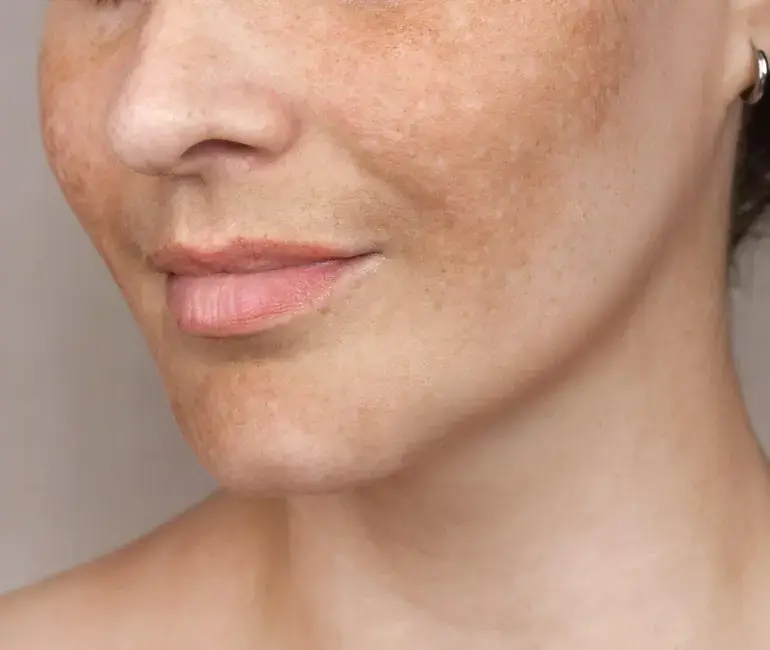
Melasma
Usually appears as symmetrical brown or grey-brown patches, commonly on the cheeks, forehead and upper lip. Sun exposure, visible light, hormonal influences and genetic susceptibility can contribute, and recurrence is common.
Freckles & Sun Spots
More localized areas of pigmentation related mainly to sun exposure and genetics. Selected lesions may respond to pigment-directed treatment.
Post-Inflammatory Hyperpigmentation (PIH)
Dark marks can remain after acne, eczema, dermatitis, irritation, injury or procedures. Treatment depends on the cause, depth of pigment and skin type.
Post-Acne Marks
Flat brown marks after acne are pigmentation, not scars. Red marks and true structural acne scars require different treatment approaches.
Other Pigmented Lesions
Not every dark spot is cosmetic pigmentation. A changing, irregular or uncertain lesion should be diagnosed before any destructive or laser treatment.
Pigmentation that looks similar can behave very differently, so diagnosis comes before the device or peel.
How Is Pigmentation Assessed?
Your dermatologist examines the distribution, color and pattern of pigmentation and reviews triggers, previous treatments, sun exposure and skin sensitivity.
Wood's Light Examination. Wood's light may be used as an additional examination tool in selected pigmentary conditions. It can provide useful information about pigment patterns, but it does not replace the clinical diagnosis and is not required for every patient.
When a lesion needs a different pathway. If a dark lesion is changing, asymmetric, irregular or diagnostically uncertain, it should be assessed as a skin lesion rather than treated immediately as pigmentation.
Which Pigmentation Treatment Is Right for Me?
Medical Skin Care
Often the foundation of treatment for melasma and post-inflammatory hyperpigmentation. Depending on the diagnosis, treatment may include dermatologist-selected depigmenting agents, retinoids, azelaic acid or other prescription and non-prescription options.
Photoprotection
Daily broad-spectrum photoprotection is essential, particularly for melasma. In pigment-prone patients, tinted sunscreen containing visible-light–protective pigments such as iron oxides may be considered.
Chemical Peels
Selected chemical peels may help improve superficial pigmentation, uneven tone and some post-inflammatory marks. Depending on the skin type and treatment goal, options may include Salicylic Acid Peels, TCA Peels and other selected medical-grade peels.
The peel type, concentration and depth are selected according to the diagnosis and pigmentation risk; stronger is not automatically better.
Q-Switched Nd:YAG — Pigmentation Treatment
Bison Lucid Q-PTP® Q-Switched Nd:YAG may be used for selected pigment concerns such as freckles, selected sun spots, some post-inflammatory pigmentation and other suitable pigment lesions.
Laser Toning
Laser toning uses low-fluence Q-Switched Nd:YAG treatment for selected diffuse pigmentation concerns. It may be considered in some melasma patients, but it is not automatically the first treatment.
Melasma can recur, and overly frequent or aggressive laser toning can contribute to rebound pigmentation or mottled hypopigmentation. For this reason, laser treatment is used conservatively and as part of a broader control strategy when appropriate.
Combination Treatment
Some pigment concerns are best addressed with more than one approach at once. The combinations that make clinical sense are set out below.
Combination Treatment
- Melasma
Medical skin care + strict photoprotection ± selected peel or carefully selected laser toning
- Freckles / selected sun spots
Pigment-directed treatment ± skin care
- Post-inflammatory pigmentation
Control the underlying inflammation + pigment-directed treatment
The best treatment is the one that matches the diagnosis and the behavior of the pigment.
Melasma Needs a Long-Term Control Strategy
Melasma is a chronic, recurrence-prone pigmentary condition. Even after good improvement, pigmentation can return with sun exposure, visible light, hormonal influences or other triggers.
- Consistent daily photoprotection
- Avoiding unnecessary irritation
- Appropriate maintenance skin care
- Treating flares early
- Using procedures selectively rather than repeatedly by default
The goal with melasma is durable control and improvement — not promising permanent removal after one peel or laser session.
What to Expect From Pigmentation Treatment
Assessment
We identify the likely pigment type, skin characteristics, triggers and previous treatment response.
Treatment Selection
The plan may involve skin care alone, a peel, Q-Switched Nd:YAG, laser toning or a staged combination.
Recovery
Recovery varies by treatment. Some approaches have minimal visible downtime; peels or focal laser may cause temporary redness, darkening, peeling or superficial crusting.
Gradual Improvement
Pigmentation usually improves progressively rather than immediately, and the required number of treatments varies.
Am I a Candidate for Pigmentation Treatment?
Treatment may suit you if you have
- Melasma
- Freckles or selected sun spots
- Post-inflammatory hyperpigmentation
- Uneven pigmentation or skin tone
- Persistent brown marks after acne or irritation
Treatment May Need to Be Modified or Postponed If There Is
- Active skin inflammation or infection
- Recent significant tanning or sunburn
- Significant irritation or barrier damage
- A recent procedure that has not fully healed
- Pregnancy or breastfeeding, depending on the treatment planned
Skin Type Matters
Skin type and tendency to develop pigmentation are especially important when choosing peels or laser treatment.
Not every dark spot should be treated the same way.
Pigmentation & Melasma FAQ
What is the best treatment for melasma?
There is no single best treatment for every patient. Melasma usually requires strict photoprotection, appropriate medical skin care and selective use of procedures according to the pattern and skin type.
Can Q-Switched Nd:YAG treat pigmentation?
Yes, in selected cases. It may be useful for freckles, selected sun spots, some post-inflammatory pigmentation and other suitable pigment lesions.
What is laser toning?
Laser toning uses low-fluence Q-Switched Nd:YAG treatment for selected diffuse pigmentation. It may be considered in some melasma patients but should not be viewed as an automatic first-line procedure.
Can pigmentation get worse after laser?
Yes. In pigment-prone skin, excessive inflammation or poorly selected treatment can worsen pigmentation. Rebound pigmentation and mottled hypopigmentation have also been reported with overly aggressive laser toning.
Which chemical peels are available?
Depending on the diagnosis and skin type, selected options may include Salicylic Acid Peels, TCA Peels and other medical-grade chemical peels. The dermatologist chooses the appropriate peel and depth.
Is a TCA Peel the same as TCA CROSS?
No. A TCA peel is applied over a broader skin area for selected pigmentation or texture concerns. TCA CROSS is a focal technique used inside selected deep acne scars, and is covered on the Acne Scar Treatment page.
How many sessions will I need?
There is no fixed number. It depends on the diagnosis, pigment depth, treatment chosen, skin type and response.
Can freckles or sun spots come back?
Yes. Sun-related pigmentation can recur, particularly with continued sun exposure.
Can you treat dark marks after acne?
Yes. Flat brown post-acne marks are a form of post-inflammatory pigmentation and may respond to skin care, selected peels or pigment-directed treatment.
Is melasma curable?
Melasma is better considered a chronic condition that can often be improved and controlled, but recurrence is common and maintenance is often needed.
Considering Pigmentation or Melasma Treatment?
Whether your concern is melasma, freckles, sun spots, post-inflammatory pigmentation or uneven skin tone, the first step is identifying the type of pigment and how your skin is likely to respond.
At Nova Derma, treatment may include medical skin care, chemical peels, Bison Lucid Q-PTP® Q-Switched Nd:YAG, laser toning or a combination approach depending on the diagnosis and skin type.
Nova Derma · Amman, Jordan