
Nova Derma | Amman, Jordan
AviClear® Acne Laser in Amman
A Different Approach to Treating Inflammatory Acne
NO DAILY SYSTEMIC ACNE MEDICATION AS PART OF THE AVICLEAR COURSE.
AviClear® is a 1726 nm laser that selectively targets the sebaceous glands involved in inflammatory acne. It is FDA-cleared for the long-term treatment of mild to severe inflammatory acne vulgaris.
At Nova Derma, AviClear treatment begins with a dermatologist assessment that determines whether it fits your acne type, severity, previous treatments, medical history and goals.
The treatment
How Does AviClear Work?
## How the treatment works
The 1726 nm wavelength targets the sebaceous glands beneath the skin, producing controlled heating that reduces sebaceous-gland activity and sebum production. Laser energy is delivered to the glands involved in acne, and the controlled heating that follows reduces their activity. Reduced gland activity can lead to progressive improvement in inflammatory acne.
Sebum is only one part of acne biology, but targeting the sebaceous gland provides a different treatment pathway from topical or systemic medication.
## Why patients consider AviClear
- A standard protocol is followed, with the number of sessions and the interval between them set by your dermatologist rather than fixed in advance.
- AviClear itself does not require a daily systemic acne drug as part of the laser treatment course.
- Because it is a laser treatment rather than a systemic acne medication, it does not itself require medication-related laboratory monitoring.
- The laser treatment does not create systemic drug exposure, although local laser-related reactions can occur.
- Most patients can return to normal daily activities after treatment, although redness, swelling, dryness or an acne flare can occur.
- Clinical follow-up has shown that improvement can continue after the treatment course is completed.
## How it compares with other acne options
AviClear is not automatically better than medication. It is a different treatment pathway, and the right choice depends on acne severity, previous treatment, medical history, scarring risk and patient preference.
- Topical treatment — topical retinoids, benzoyl peroxide, azelaic acid and other treatments remain important for many acne patterns.
- Oral antibiotics — used selectively for inflammatory acne and generally for limited durations.
- Hormonal treatment — may be appropriate for selected female patients when the acne pattern and medical history support it.
- Isotretinoin — a highly effective systemic treatment, particularly for severe, nodular, scarring or treatment-resistant acne.
- AviClear® — a laser pathway targeting the sebaceous glands without a daily systemic acne drug as part of the AviClear course.
- Combination care — some patients may still need topical or other acne care before, during or after the AviClear course.
The goal is to choose the treatment plan that makes the most sense for your acne.
You do not need to decide whether AviClear is right for you before the appointment. A dermatologist makes that assessment with you.
Am I a Candidate for AviClear®?
AviClear may be considered for suitable patients with mild, moderate or severe inflammatory acne, including recurrent inflammatory breakouts.
AviClear may be considered when
- Inflammatory papules and pustules are present
- Inflammatory acne keeps recurring
- There is a concern about scarring risk
- You prefer to avoid relying solely on a daily systemic medication
Treatment is not given during
- Pregnancy
- Treatment for skin cancer
Adolescents and adults
AviClear can be used in adolescents and adults. Suitability is determined after a dermatologist assessment based on acne type and severity, skin condition, medical history, previous treatments and other relevant clinical factors.
Important
AviClear is contraindicated during pregnancy and in patients undergoing treatment for skin cancer. Other medical factors, medications, skin conditions and healing history are reviewed before treatment.
You do not need to decide whether you are a candidate before the appointment. The dermatologist makes that assessment with you.
Your visit
What to Expect
The visit is led by a dermatologist, from the first assessment through to the review after the course.
Dermatology Assessment
Your acne, medical history, previous treatment and goals are reviewed.
Treatment Session
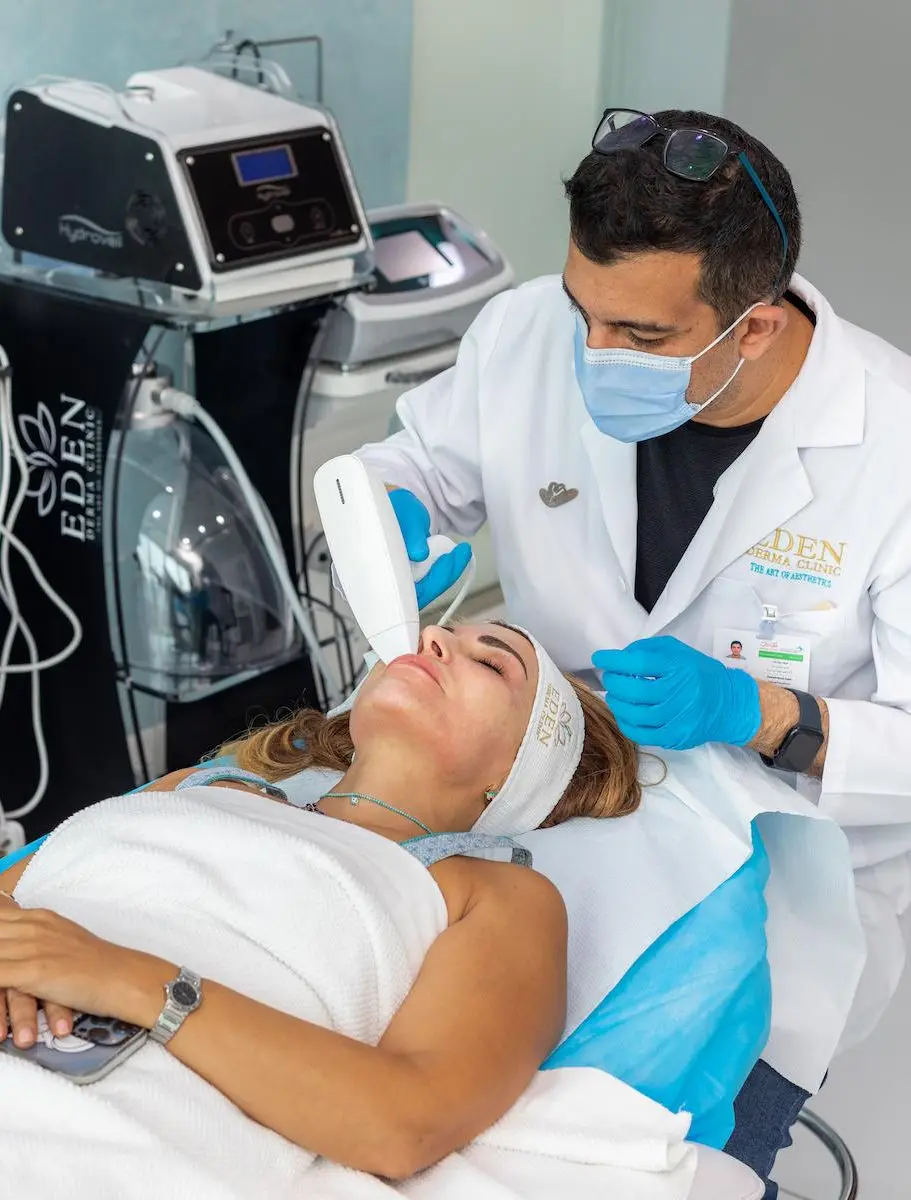
AviClear delivers 1726 nm laser energy through a handpiece with AviCool™ contact cooling.
About 30 Minutes
A typical treatment session is approximately 30 minutes.
Return to Daily Activities
Temporary redness, swelling, dryness, discomfort or an acne flare can occur.
Complete the Course
Sessions are commonly spaced several weeks apart, with the exact schedule and the number of sessions determined by the treating dermatologist.
Reassess Over Time
The result is not judged immediately after the last session; improvement can continue after the course is completed.
You may start seeing improvement in the months following your final AviClear session, and results can continue to develop afterwards, so the outcome should not be judged immediately after the last session. A temporary acne flare can occur after treatment; if it happens, your dermatologist can assess whether additional skin care or medical treatment is needed while the course continues.
Safety and aftercare
Safety, Side Effects & Aftercare
AviClear is non-invasive, but it is still a medical laser treatment.
- Redness, swelling and dryness after a session are common and temporary.
- Some patients notice discomfort or a temporary acne flare in the days after treatment.
- AviCool™ contact cooling is built into the system and is used during treatment.
- The laser does not create systemic drug exposure, although local laser-related reactions can occur.
- Most patients return to their normal daily activities after treatment.
- Less common complications are discussed with you during consent, according to your history and treatment plan.
Your current acne skin-care regimen is reviewed before treatment, and the dermatologist will tell you what to continue, pause or modify.
About clinical images
Dermatologist-led care
Your treatment is planned by a dermatologist
Dr. Qusai Shakhatreh
Specialist in Dermatology & Venereology
Dr. Qusai Shakhatreh is a dermatologist at Nova Derma in Amman, providing medical, surgical and aesthetic dermatology care for adults, teenagers and children. His clinical approach is diagnosis-first: understanding the skin, hair or nail condition before selecting medication, a procedure, an injectable treatment or a device-based option. Clinical decisions are individualized according to the diagnosis, disease severity, medical history, skin type and patient goals. His medical and dermatology experience spans 2016 to the present, covering specialty training and clinical practice in medical, procedural and aesthetic dermatology, and he continues to integrate medical assessment with appropriate procedural and technology-based treatment.
AviClear FAQ
How many AviClear sessions are needed?
There is no fixed session count. Your dermatologist sets the number of sessions and the interval between them according to your acne type, severity and response, and reviews the plan as the course progresses.
How long is each session?
A typical treatment session is approximately 30 minutes.
How far apart are the sessions?
Sessions are commonly spaced several weeks apart, with the exact schedule determined by the treating clinician.
Does AviClear require blood tests?
AviClear itself does not require medication-related laboratory monitoring, because it is a laser treatment rather than a systemic acne drug.
Is AviClear pain-free?
No. Patients may feel heat, snapping or discomfort during treatment. AviCool™ contact cooling is built into the system to make the session more tolerable.
Is there downtime?
Most patients return to their normal activities, but temporary redness, swelling, dryness or an acne flare can occur.
Does AviClear treat acne scars?
Its primary role is the treatment of active inflammatory acne, not established structural acne scars. Scar concerns are assessed and planned separately.
Can adolescents and adults have AviClear?
Yes. AviClear can be used in adolescents and adults. Suitability is determined after a dermatologist assessment based on acne type and severity, skin condition, medical history, previous treatments and other relevant clinical factors.
Can AviClear treat hormonal acne?
AviClear can reduce sebaceous-gland activity in suitable inflammatory acne, but it does not correct an underlying hormonal driver. Some patients may still need hormonal or other medical management.
Is AviClear better than isotretinoin?
They are different treatments. Isotretinoin remains highly effective and appropriate for many severe or scarring cases; AviClear offers a non-systemic, device-based option for suitable patients.
Can I use acne creams during AviClear treatment?
Your current regimen should be reviewed before treatment. The dermatologist will tell you what to continue, pause or modify.
Suitability is always decided after a dermatologist assessment, not from a web page.
Is AviClear® the Right Treatment for Your Acne?
The answer depends on your acne type, severity, previous treatments, medical history and what matters most to you in a treatment plan. A dermatologist consultation is the right starting point.
Nova Derma · Amman, Jordan