
laser-hair-removallaser
What a Laser Hair Removal Session Is Actually Like
By Dr. Qusai Shakhatreh ·
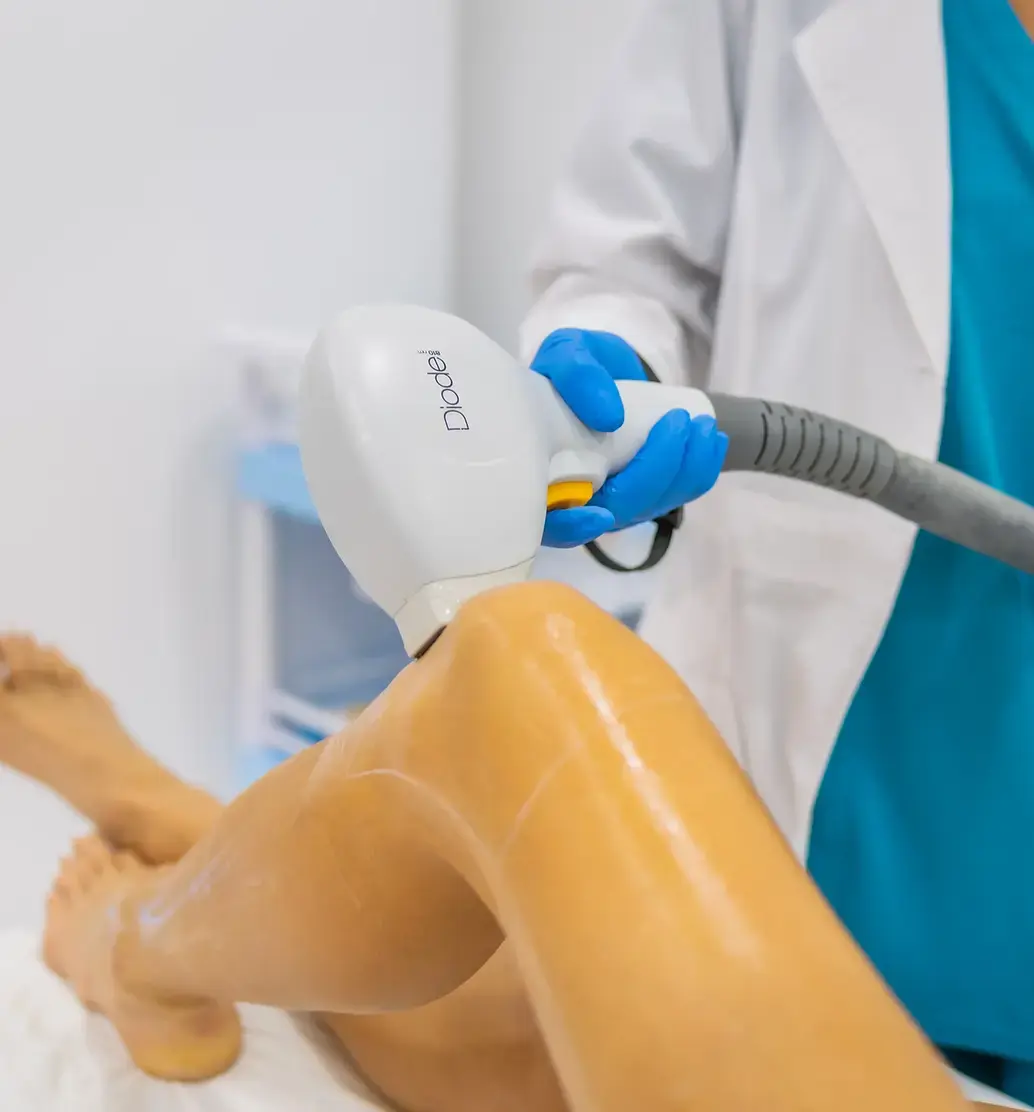
Laser hair removal is often described as 'lasering away' hair, which sets up the wrong expectation. Nothing is removed. A laser sends a beam of light at a specific wavelength, melanin in the hair absorbs it, converts it to heat, and that heat damages the follicle — the structure that grows the hair.
That distinction explains the two things patients notice most. First, the hair is not gone after one session: follicles that are not in their active growth phase are unaffected, so a series of treatments is needed to catch them at the right moment. Second, the surrounding skin is barely affected, which is why the treatment is safe for the skin, and why the discomfort is described as a snap of a rubber band rather than a burn.
For a full lower leg, most patients need six to eight sessions spaced a few weeks apart, plus a maintenance session or two a year afterwards. Regrowth between sessions is normal and is not a sign the treatment has failed.
What does change the plan is skin type. Laser needs melanin in the hair to work, so it is far less effective on very fine, light or grey hair, and on deeply tanned skin. A dermatologist will tell you this at your consultation rather than selling a course that cannot deliver.
Sun exposure before and after treatment is the other thing that decides the result. Tanned skin absorbs more of the light and carries a real burn risk, so the six weeks either side of a course are not an arbitrary rule.