
acneacne-scars
What Acne Scar Treatment Actually Involves in Amman
By Dr. Qusai Shakhatreh ·
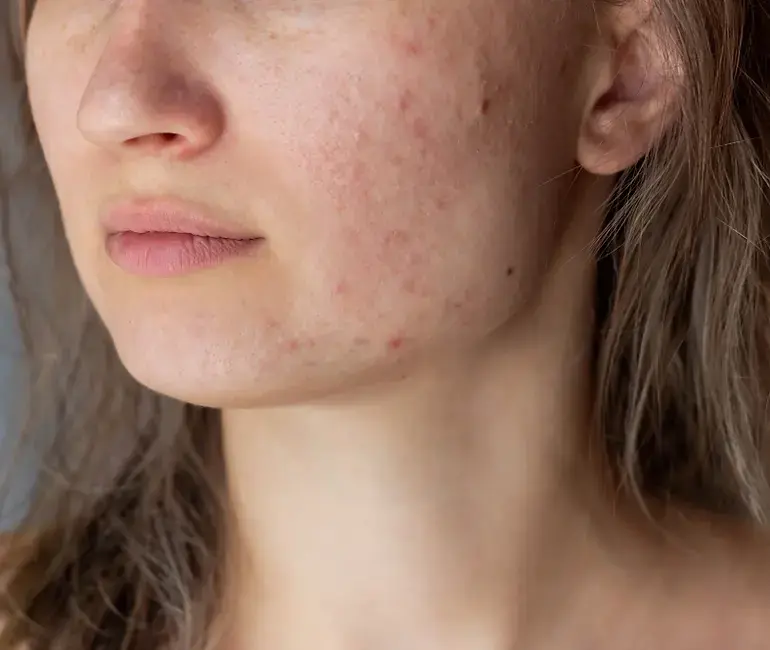
Acne scars are the marks acne leaves behind once a spot has healed. The colour may fade on its own over months, but the texture — the pitted or raised surface — usually does not, and that is the part most people want treated.
The first thing a dermatologist does is classify the scars. Rolling scars sit under the skin and look like waves, ice-pick scars are narrow and deep, and boxcar scars have defined edges. The treatment follows the type, because a resurfacing procedure that flattens a rolling scar can make a deep ice-pick scar look worse.
For rolling and boxcar scars, fractional laser resurfacing and microneedling are the two most common options. Both work by stimulating collagen in the deeper layers of the skin rather than by removing the surface. That is why the result keeps improving for three to six months after the last session, and why patience matters more than the appointment itself.
For deep ice-pick scars, a small procedure called a subcision or a punch excision is often a better answer than a laser. The downtime is shorter and the improvement is more immediate, because the scar is being released physically rather than remodelled.
Every one of these is a medical decision made after an examination. A photograph of a scar tells a dermatologist far less than seeing it under a good light and feeling how it moves when the skin stretches.